Entry · Ref AIPZRKPT
Acs Peptide Screening Laboratories Third-party Peptide Evaluation
- Posted
- 2026-10-07
- Last amended
- 2026-10-07
- Account
- @elliottdxoy543
Just How To Test Peptides For Pureness: Hplc, Ms & Coa Overview They are not intended for human consumption, healing usage, or any kind of form of self-administration. Any kind of references to research study findings, professional research studies, or prospective applications are supplied only to inform the clinical community and do not constitute clinical cases. Mass spectrometry gives molecular-level confirmation that the major chromatographic peak matches the anticipated peptide Learn more here mass. Batch-specific testing indicates that every production run undertakes independent analysis as opposed to counting on historic testing from previous batches. Each set gets a special identifier that connects it to details COA results.
How much time does an HPLC examination take?
Time Required for HPLC EDTA Test Records + Next Actions
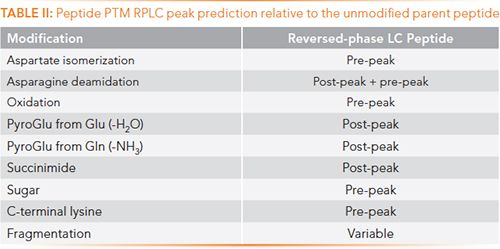
What Hplc Can Sustain
- Regular settings for standard, integration, circulation price, and slope conditions are crucial for comparable information.
- This technique consists of HPLC purity evaluation and size exemption chromatography (SEC).
- We provide top notch, preclinical dose formula evaluation for GLP and non-GLP research studies to guarantee your study begins on the right course.
- All peptides marketed by Apex Lab are desired exclusively for in-vitro laboratory research study use and are except human intake.
- At the end of the synthesis the peptides were cleaved off the material by reagent R (90% TFA, 5% Thioanisole, 3% Ethanedithiol, and 2% Anisole) and subjected to multiple ether extractions.
What Kinds Of Hplc Screening Solutions Are Offered In A Hplc Laboratory?
The area under the main peptide optimal, contrasted to the total area of all tops, figures out the pureness portion. Research-grade peptides generally show a leading top standing for 99% or more of the total location, with marginal contamination peaks. Exact analytical recognition is important to validate peptide identification, purity, and stability. Our solutions include HPLC and mass spectrometry testing to make certain that peptides meet research-grade demands. We will certainly choose the most appropriate elution solvent for you according to your example features, sample type and the solvent you use to liquify the example. Initially, a tiny quantity of the peptide is dissolved in a fluid and infused into the HPLC equipment. That fluid is then pushed with a narrow tube (called a column) under high stress. Knowing exactly how to test peptides for pureness makes sure the reliability and reproducibility of every research procedure. This guide describes the three gold-standard analytical approaches-- HPLC, mass spectrometry, and third-party testing-- and Pharmaceutical Manufacturing just how researchers can interpret outcomes to confirm that their substances satisfy research-grade quality standards. Without orthogonal techniques to discover these microheterogeneities, they increase in a system (passing away as 'biological variability'), decreasing signal-to-noise and ultimately revoking whole data collections. Official HPLC/MS characterization freezes that degeneration in position, subjecting each molecule to 2 orthogonal choice stress (hydrophobicity and mass-to-charge), creating an analytical firewall program around false identification. Typical purity degrees vary in between 99.0% and 99.7%, lining up with global research laboratory research study requirements. These examinations validate that peptides from Peptides Laboratory UK include no impurities, destruction byproducts, or undesirable fillers-- just confirmed, high-purity study material.Entry closed✓ Balanced